
Birding Safaris In Kenya
- Home
- Birding Safaris In Kenya
Birding Safaris In Kenya
Bird Watching Safaris In Kenya
Kenya is one of Africa’s best birding destinations, with more than 1,100 recorded bird species – it’s a ‘birder’s paradise’ in every way. Numerous endemic and near-endemic species, which are especially sought-after, can be seen on any birding trip. European and northern African migrants are present in Kenya from November to April.
Kenya ranks second in Africa (after the Democratic Republic of Congo (DRC)) and 11th in the world in terms of total number of bird species recorded!
Understand; many factors combine to make the country favorable to bird life: the equatorial climate, a diverse range of habitats (from wetlands to moorlands, tropical rainforests to deserts and mangroves to mountains), unique geographical features (from The Great Rift Valley to chains of ancient volcanoes) and an abundance of food resources for migratory birds – Kenya having almost all these features gives it the advantage as a prime destination for a birdwatching holiday at any time of year, with a world-record ‘bird watch’ – 342 species seen in 24 hours!


Birds You Can Expect To See On A Kenya Safari
Kenya is home for excellent birding tours thanks to its vast variety of habitats: from dense and lush mountain forests to alkaline lakes and grass savannahs particularly in the Greater Masai Mara which offer impressive bird watching opportunities with over 500 recorded species in the region alone. From the savannah and woodland habitats to the freshwater lakes in the Rift Valley and the high altitudes of the Laikipia Plateau, Kenya boasts an abundance of birdlife scenery all year round. So where are the best places to see the birds of Kenya?
While we cannot guarantee sightings of the birds or mammals listed below, we believe that encountering these species is quite likely during any Kenya birding tour.
Best Birding Safari Packages


9 Days Luxury Kenya Safari
Join us on this luxury safari, visiting some of the most epic wildlife locations…

5 Days Private Kenya Safari
Discover Kenya’s iconic destinations in this epic adventure…
6 Days Kenya Safari Tour
An unchartered wilderness journey on a 4×4 in Kenya’s intimate…
Masai Mara Birdwatching Safaris
Planning a Masai Mara birding tour? – Kenya’s top safari destination & thanks to Masai Mara’s riverine trees which line a small stretch along Mara River, and a good landscape, the Mara ecosystem provides refuge for a stunning array of species considered almost impossible to find elsewhere.
In Mara, expect to come across forest-dwelling species such as Schalow’s and Ross’s turacos, black-and-white casqued hornbills, African paradise and African blue flycatchers, olive pigeons, violet-backed starlings, double-toothed barbets, Meyer’s parrots and narina trogons are often seen within the campgrounds.
Within Masai Mara’s open, a diverse range of bird species can be found, from raptors like African fish eagles and tawny eagles, to vultures such as ruppell’s griffon, white-backed & lappet-faced, and a variety of other birds like bustards, secretary birds, starlings, oxpeckers, lapwings, ground hornbills, coucals and cuckoos, seedeaters and bee-eaters .
Along the Mara River, the main stage for wildebeest river crossings, the Musiara Marsh, and the central marsh area, you can expect to see scores of wetland birds such as herons, storks (saddle-billed & white), kingfishers, painted snipes, ducks, geese and crakes. With over 500 species of birds recorded in the Mara, you’ll soon find yourself with a surprisingly lengthy list of recordings!
Moving along Talek River, expect to encounter the African Fish Eagle, frequently spotted fishing alongside the Hamerkops, often spotted building nests nerby. Also keep an eye out for the Giant Kingfisher, known to be the largest kingfisher in the region.
Amboseli Birding Tour
An Amboseli bird-watching tour – Amboseli, listed alongside popular destinations in Kenya, features a favorable climate, diverse habitats, and geographical features that make it a suitable migratory route for birds with over 420 bird species.
The park’s diverse ecosystem of swampy, acacia woodlands and open savanna grasslands favors the survival of the different birds. The African Jacana, crowned cranes, flamingos, and lapwings are notable birds you can see on a birding safari in Amboseli.
Its swampy areas; these wet spots stay busy with birdlife, drawing all kinds from herons, pelicans, and egrets in numbers. With water around the area, birding adventures can never go wrong. Amboseli’s wide open fields flourish with small birds. These areas are best for seeing birds like hornbills, sunbirds, and bee-eaters – best times for encounters around late afternoons.
Rainy days attract new sorts of birdlife, adding to the bird-watching fun, pulling in birds from far places like European bee-eaters and rollers. These far-traveling birds join local ones, showing off how they mate and act – around November to April are even better.
Lake Amboseli comes to life after rain falls. Its low waters make a place that changes and pulls in many water and sand birds. In wet times, the lake is full of birds that come to eat and make homes. Flamingos will congregate in their thousands in Lake Amboseli and camouflage in pink, a remarkable sighting – but remember to check water levels first before you plan a birding trip to Amboseli. Generally, birding safaris in Amboseli National Park are possible throughout the year.
Birds at Kenya's Great Rift Valley Lakes
– Lake Naivasha Bird-Watching
Lake Naivasha, a Great Rift Valley Lake in Kenya is among the recommended birding destinations in Kenya. Listed as an important birding area, it’s often visited by specialist birding tours simply because of the sheer number of birds found there (over 400 species!).
Being a freshwater lake, countless waterbirds are attracted to it. Notable bird families frequently seen comprise cormorants, pelicans, darters, ducks, teals and geese, herons, jacanas, kingfishers, storks, grebes, coots, spoonbills and the occasional flamingo stopping to drink fresh water. The shoreline vegetation of giant-leaved fig trees and yellow-barked acacias is an excellent habitat for owls, wood hoopoes, green pigeons, ring-necked doves, woodpeckers and weaver birds. The trees are also home to the continent’s highest concentration of African fish eagles, many of which nest in pairs.
Almost similar to major birding destinations, Lake Naivasha’s birding ecosystem varies from the Lake to the woodland and a bit of swamp vegetation. Naivasha supports a huge variety of aquatic birds.


– Lake Nakuru Bird-Watching Safari
Situated on the floor of the eastern arm of the Great Rift Valley south of Nakuru. The lake has an elevation of 1754 meters above sea level and is among the best birding destinations in Kenya. Lake Nakuru Park recorded the highest flamingo population because of the abundance of algae but the numbers reduced when the lake flooded.
The availability of picnic spots, and game drives make it possible to encounter the notable birds which include the African Fish Eagle, Kingfishers, great white pelicans, grey-crowned Cranes, and yellow-billed storks among others. While looking for Narina trogons, red-throated wrynecks, greater honeyguides, and African fire finches, remember – Lake Nakuru is a protected rhino sanctuary making it one of the best places in Kenya to see Rhinos. Both white Rhino and black rhino species are present and often seen while on game drives alongside other big five safari animals.
– Lake Bogoria Birding Tour
Blanketed by a sea of pink and hot spitting geysers, Lake Bogoria is one of Kenya alkaline lakes, and home to one of the largest aggregations of lesser flamingos in Kenya, protected since 1973. It can be easily visited as a day trip from Nairobi.
This 107km² (about 66 mi) National Reserve sees much fewer visitors than the safari parks in the area. Lake Bogoria’s scenery dotted with springs and geysers is also home to little grebe, tawny eagle, pratincole, swift, little bee-eater, Cape-wigeon, Gabar goshawk, water dikkop, and hornbill as well as kudu, warthogs, zebras, baboons and many other small mammals.
Though the main attraction is the over 2 million flamingos known to occupy the Lake at any one time. They can be found here at any time of year, making the lake one of the best spots to see flamingos.
– Lake Elmenteita Bird-Watching
Lake Elmenteita landscape includes the soda lake, three rivers, grasslands, woodlands, riparian land, rocky outcrops and hillsides, all of which support over 400 species to be enjoyed by the ardent birder. Being a Rift Valley soda lake, it provides an entirely different habitat for avifauna from Naivasha’s freshwater ecosystem. Lesser and greater flamingos can almost always be seen filter-feeding on microscopic algae and crustaceans in their thousands, flocks of pied avocets and spoonbills are also frequently seen feeding in the shallows, Cape teals bob along on the water’s surface and grey-headed gulls patrol the shoreline from the skies whilst both pink-backed and great-white pelicans descend upon the lake great numbers for feeding and breeding.
– Lake Baringo Birding Safari
Lake Baringo is a birding haven that never fails to impress, adding to the long list of Kenya birding safari destinations. The Lake has a surface area of 130 square kilometers and an elevation of 970 meters above sea level. There are over 500 bird species here including flamingos that migrate from Lake Nakuru. Visitors can easily spot 120 (of the 480 species on its recorded list) species in a 12-hour period. Some of the birding highlights include African spoonbills, African scops owls, slender nightjars, brown babblers, and even Verreaux’s eagle alongside Guineafowls, pigeons, ostriches, and Greyish eagle owls during this birding tour.
Birds At Nairobi National Park
Bird watching at Nairobi National Park – Nairobi National Park is located in Nairobi Kenya’s Capital City. It’s the only national park within the city’s proximity. The park has a diverse ecosystem that includes savanna grasslands, wetlands, valleys, and wooded plains that are home to a variety of wildlife species and birds. With more than 520 bird species recorded, Nairobi National Park gives Kenya’s capital one of the longest bird lists of any city in the world.
The park’s undisturbed grassland is of great importance for species such as the range-restricted Jackson’s widowbird, which breeds here regularly after good rains. Other grassland species include common ostrich, secretary bird and a variety of bustards.Waterbirds often gather around Hyena Dam and Nagolomon Dam. Nairobi National Park is a good birding destination, and it’s easy to explore especially on an organised Nairobi city safari or a full-day Nairobi park tour.
Other Nairobi National Park bird species include; Abyssinian thrush, Blacksmith lapwing, Brown-backed woodpecker, Common moorhen, Corncrake, Fischer’s lovebird, Grey crowned crane, Hamerkop, Hartlaub’s bustard, Jackson’s widowbird, Kori bustard, Lappet-faced vulture, Lesser kestrel, Long-tailed fiscal, Marabou stork, Martial eagle, Northern pied babbler, Pallid harrier, Purple grenadier and Saddle-billed stork among others.
Birding In Laikipia Region
Bird-watching In Laikipia Region – The region is considerably more arid than the Masai Mara and is situated at a higher altitude. The common bird species found here include sandgrouse, black-shouldered kites, Namaqua doves, yellow-necked spurfowl, white-bellied go-away birds, white-browed coucals, brown babblers, rufous-crowned rollers, marico sunbirds, red-billed hornbills, gabar goshawks, D’Arnaud’s barbets, bearded Woodpeckers, crested francolins, northern white-crowned shrikes, black-headed orioles, paradise fly-catchers and greater blue-eared starlings to name just a few. Laikipia offers good bird watching year-round, but the best months are December to March. Migratory species arrive from Europe and North Africa from November to April and this partly coincides with the Wet season (October to May) when many species appear in breeding plumage.
Ol Pejeta Birding Tour
Ol Pejeta bird-watching tour – as for Ol Pejeta Conservancy, located in central Kenya, with more than 500 species recorded, early morning and afternoon bird walks can be organized within the lodge. On game drives the focus tends to be on spotting large animals, so it might be worth booking a Kenya private safari if bird watching is your main interest. Notable birds in Ol Pejeta include; Black-winged lapwing, Common ostrich, Hildebrandt’s starling, Rosy-throated longclaw, Secretary bird alongside Abyssinian scimitarbill, Amethyst sunbird, Black-winged lapwing, Blue-naped mousebird, Buff-crested bustard, Cinnamon-chested bee-eater, D’Arnaud’s barbet, Kenya rufous sparrow, Kori bustard, Long-billed pipit, Montagu’s harrier, Nubian woodpecker, Rosy-throated longclaw, Rufous chatterer, Taita fiscal, Temminck’s courser, White-bellied go-away-bird, White-eyed slaty flycatcher and Yellow-necked spurfowl.
Birding At Arabuko-Sokoke National Park
Arabuko Sokoke Forest Reserve comprises the largest remaining tract of coastal forest in East Africa. It is best known as a bird-watching destination, thanks to the presence of several rare endemic and near-endemic species. For birding lovers planning bird watching tours in Kenya, Arabuko-Sokoke Park is a must-visit bucket-list destination.
The park is a stronghold for several globally threatened species, including the endemic Clarke’s weaver and near-endemic Sokoke scops owl. Other notable birds include Sokoke pipit, Amani sunbird, spotted ground thrush, east coast akalat and chestnut-fronted helmet-shrike. Other more noticeable forest birds include Fischer’s turaco, trumpeter hornbill and silvery-cheeked hornbill.
Arabuko Sokoke is a bird-watcher’s paradise throughout the year. A lot of the more unusual forest species are resident and can be spotted at any time. Migratory birds are added to the mix from November to April. Heavy rain, which is most likely in November (the peak of the short rains) or April and May (the long rains), can interfere with bird-watching activities. Guided nature and bird walks can be arranged on the spot at Gede Gate.
Tsavo East and Taita Hills Bird-Watching Safaris
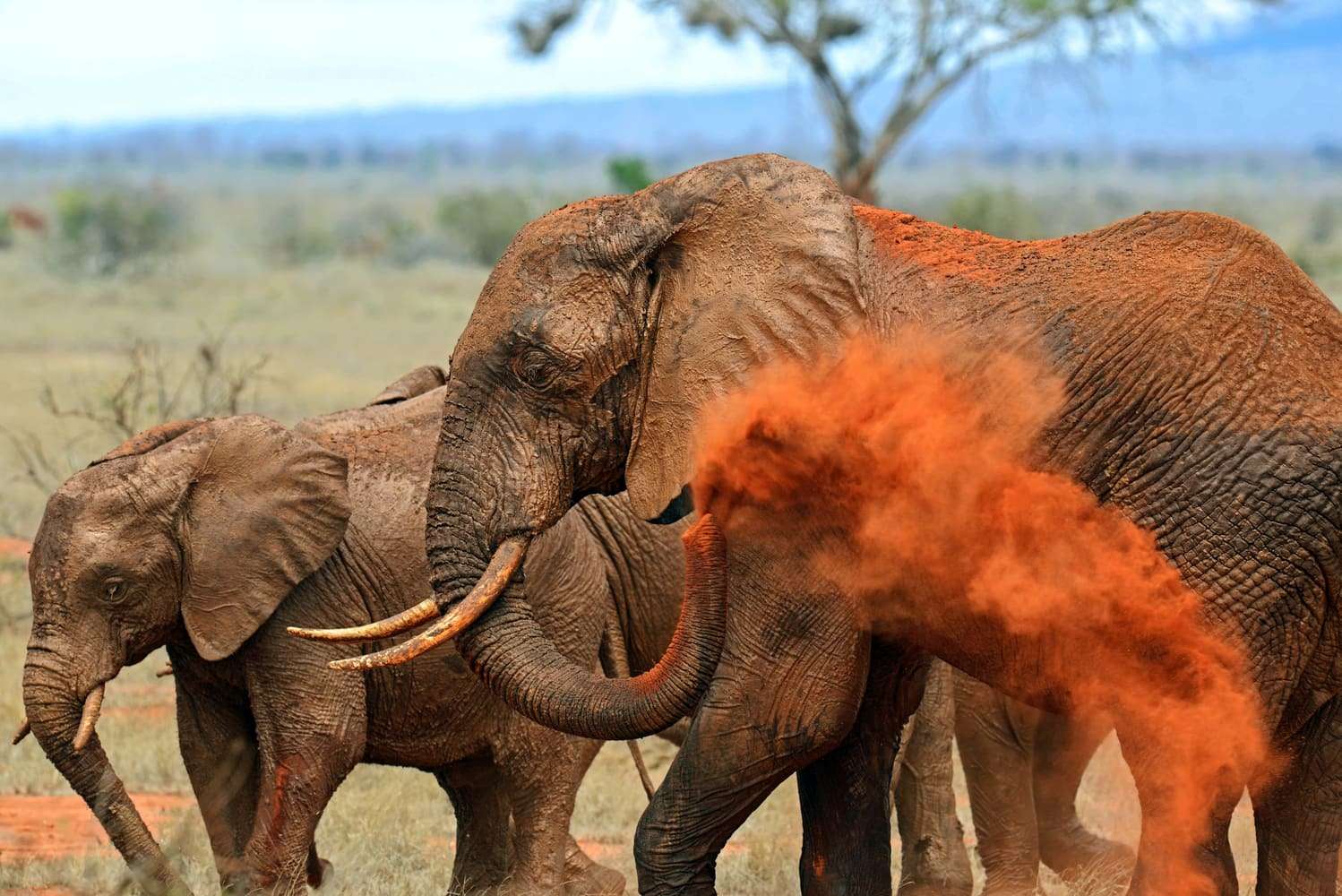
Tsavo East and Taita Hills – Located in southern Kenya, Tsavo East and West are famous for man-eating lions and red elephants. Tsavo East and Tsavo West, together, make up the largest National Park in Kenya. Taita Hills is a private wildlife sanctuary on the eastern edge of Tsavo West. Located in an important ecological corridor, Taita Hills covers over 28,000 acres (about the area of Manhattan) of riverine forest, savanna wood, and grassland.
With an impressive birding checklist of more than 500, Tsavo East Park holds a long list of dry-country specials, many of which are quite easily seen. Be on the lookout for the magnificent golden-breasted starling, golden pipit and rosy-patched bush-shrike, as well as the striking vulturine guineafowl. The park is also the most southerly stronghold for the Somali ostrich and a significant wintering ground for migrant species from Europe. Other birds include; African finfoot, Black-faced sandgrouse, Fischer’s starling, Golden pipit, Golden-breasted starling, Lesser kestrel, Martial eagle, Northern brownbul, Pangani longclaw, Pygmy falcon, Red-bellied parrot, Rosy-patched bush-shrike, Rufous chatterer, Secretary bird, Shelley’s starling, Slender-tailed nightjar whereas migratory birds are present from November to April.
Taita Hills Sanctuary straddles the Southern Tsavo West National Park and is an important dispersal area and migrating corridor for wildlife between Tsavo East National Park and Tsavo West National Park and making it a highly valued tourism spot. Over 350 bird species including resident and migrant bird species have been recorded and documented in the sanctuary. Three endemic bird species can also be viewed at the nearby Taita hills; i.e. the Taita thrush. Taita Apalis and Taita white eye. Others include the straw-tailed whydah, sombre nightjars, taveta golden weaver, and singing bush larks.
Kakamega Forest Bird-Watching Tours
Birding at Kakamega Forest – Kakamega Forest ranks among Kenya’s most rewarding bird-watching spots. It’s the country’s largest surviving tropical rainforest, it forms the easternmost haunt of many species more usually associated with West Africa. The forest is a must-visit destination for keen birders, featuring a jungle atmosphere that appeals greatly to adventurers.
Recording a birding checklist of around 410 species. This includes 80 species more commonly associated with Central or West Africa. Kakamega is the most accessible East African site for the colorful blue-headed bee-eater. Other specials range from the spectacular great blue turaco, white-headed wood-hoopoe and red-headed malimbe to the drab but localized Turner’s eremomela and Chapin’s flycatcher alongside African blue flycatcher, African broadbill, African emerald cuckoo, African goshawk, African grey parrot, Banded prinia, Black cuckoo, Black-and-white-casqued hornbill, Black-billed turaco, Black-billed weaver, Black-crowned waxbill, Black-faced rufous warbler, Blue-headed bee-eater, Blue malkoha, Blue-shouldered robin-chat, Brown illadopsis, Brown-capped weaver, Brown-chested alethe, Brown-eared woodpecker, Brown-throated wattle-eye, Buff-spotted woodpecker, Buff-throated apalis, Cassin’s honeybird, Chapin’s flycatcher, Chestnut wattle-eye, Chubb’s cisticola, Cinnamon-chested bee-eater, Crowned eagle, Dusky tit, Eastern olive sunbird, Giant kingfisher and more.
Birding at Mount Kenya and the Aberdare National Park
Mt. Kenya and the Aberdare National Park are both excellent birdwatching destinations. Mountain peaks, lush forests, moorland, and abundant water create a habitat for abundant birdlife. The scenery alone makes birding in these locations spectacular. Mount Kenya is home to the violet-backed starling, green pigeon, and Meyer’s parrot. The two rarities that bring birders from around the globe, however, are the olive ibis and Abbott’s starling. These rare secretive forest birds can be reliably located in Mount Kenya National Park.
Aberdare is a birder’s paradise, with around 300 species recorded, including many rarities. Striking forest birds that might be seen at the tree hotels include Hartlaub’s turaco, silvery-cheeked hornbill and cinnamon-chested bee-eater. Birding highlights at higher altitudes include the localized Jackson’s spurfowl, handsome augur buzzard and endemic Aberdare cisticola. A variety of nectar-feeding sunbirds, including the very localized and colorful scarlet-tufted malachite sunbird, are attracted to flowering plants.
Birding In Samburu-Shaba-Buffalo Springs
Bird-watching In Samburu-Shaba-Buffalo Springs – Samburu National Park, Buffalo Springs National Park, and Shaba National Reserve all fall within Kenya’s arid zone. The Ewaso Ng’iro River separates the three reserves and serves as a lifeline to the wildlife that inhabits this inhospitable terrain. Over 400 bird species have been recorded here. Things wil get more exciting when migratory birds arrive in the reserve around November and stay until April. One important consideration is the weather, as heavy showers can affect your birding plans. November and April receive the most rainfall, so December to February or March are generally best for bird watching.
Birds & birding in Samburu National Reserve; the dry, open country offers very rewarding birding opportunities and boasts a number of northeast African dry-country species shared with Ethiopia and Somalia, such as vulturine guineafowl, Somali bee-eater and golden-breasted starling.
Birds & birding in Buffalo Springs National Reserve; together, Buffalo Springs and Samburu National Reserves have more than 390 bird species recorded. Some of the heavyweights to look out for while here include Somali ostrich, vulturine guineafowl and Abyssinian ground hornbill. This area is also great for seeing the unusual Egyptian vulture.
Birding in Shaba National Reserve; the area holds a number of northeast African dry-country species that are also found in Ethiopia and Somalia, and if bird watching is your main interest, Shaba is a great choice. The reserve has very little tourist traffic compared to Buffalo Springs and Samburu, which have higher mammal densities.
Bird-Watching In Mida Creek
Birding at Mida Creek – birds & birding in Mida Creek – stretching inland from the sea into Arabuko Sokoke Forest, Mida Creek, a broadwater tidal creek surrounded by extensive mangroves and lined with palms. This 32km2 creek is home to many species of fish and feeding sea turtles, while in the mangroves smaller streams and inlets provide a refuge for crabs and birdlife. Mida Creek is a key stopover point for countless migratory birds making it one of the most important and beautiful attractions on the Kenyan coast.
Lots of waders in the estuary but don’t neglect the mangroves. Highlights include: Yellow-billed Stork Purple-banded Sunbird Yellow-fronted Canary Pale Flycatcher (East Coast) Black-headed Heron African Pipit (African) Lizard Buzzard Sombre Greenbul Crab-Plover Whimbrel Sacred Ibis Grey Plover Gull-billed Tern African Spoonbill Western Reef Egret Lilac-breasted Roller Purple Grenadier Parrot-billed Sparrow
Top-Rated Birding Destinations In Kenya
Kenya’s national parks make excellent places for bird watching in Kenya, with more than 1,100 recorded species – Kenya is listed as one of Africa’s best birding destinations. Together, endemic and near-endemic species can be seen on any birding trip. European and northern African migrants are present in Kenya from November to April. Although you’ll have to go off the beaten track to find most of the birds, all top Kenya safari destinations offer great birding opportunities – bird sightings are pretty much everywhere you go.
Kenya’s best birdwatching destinations include Masai Mara National Reserve, Amboseli Park, which also happen to be outstanding birding destination, the Rift Valley lakes, including Lakes Nakuru, Lake Naivasha and Bogoria, which are good for waterbirds including flamingos, which you can also see in Amboseli, North of Kenya including Samburu National Reserve offers many dry-country birding specials, while Arabuko Sokoke Forest Reserve and Kakamega Forest are top birding hot spots for forest species.
Best Time To Go Bird Watching In Kenya
Bird watching in Kenya is excellent throughout the year, but the rainy seasons of March to April and October to November match with the arrival of Palearctic migratory birds from Europe and northern Africa – at this time, many resident bird species are nesting and are in breeding plumage, making it the best time to visit. These are just some of the best season for birding safaris in Kenya.
Other Popular Birds In Kenya
While on your birding trip, some of the common encounters include; Crowned hornbill, Hartlaub’s bustard, Scarlet-chested sunbird, Southern ground hornbill, White-bellied go-away-bird and other species include: Abyssinian crimsonwing, Bar-tailed trogon, Blue-headed bee-eater, Friedmann’s lark, Golden-breasted starling, Golden-winged sunbird, Great blue turaco, Kori bustard, Red-naped bush-shrike, Secretary bird, Somali courser, Somali sparrow, Taita apalis, Turner’s eremomela, Vulturine guineafowl, and Yellow-bellied wattle-eye. Join our Kenya birding safari packages, and let us guide to the best birdwatching spots on an African safari encounter.
Things To Bring On Your Birding Safari To Kenya
Apart from the normal list of what to pack for a Kenya safari, here are some suggestions of what to bring on a bird watching safari:
-A pair of binoculars
-A good hat
-A pair of sunglasses with polarized lenses to reduce glare, protect your eyes and provide additional clarity.
-A pocket notebook for any field notes.
-And most importantly, a good guidebook for identifying East African birds. We recommend the following two best Kenya birding books:
Birds of East Africa | (Kenya, Tanzania, Uganda, Rwanda and Burundi) | By Terry Stevenson, John Fanshawe, Brian E Small & John Gale | Helm | 2020 | Edition 2 | Paperback | 640 pages, 289 colour plates, 3500+ colour illustrations, distribution maps |
Birds of Kenya and Northern Tanzania | By Dale Zimmerman, Don Turner, David Pearson, Ian Willis and Douglas Pratt | Christopher Helm | 1996 | Hardback | 740 pages, 124 colour plates, line drawings, 1,000 maps
Kenya’s Migratory Bird Species
It’s important to take note that Kenya is home to 11% of the world’s bird species, with migratory species making up about 10% of Kenya’s birdlife.
Kenya’s migratory bird species fit into two categories; the Palearctic migrants and the intra-Africa migrants. Palearctic migrant birds visit Kenya from Europe and Asia every year. Intra-African migrants are birds that migrate within the African continent. Both sets of migrant birds visit Kenya from about November to April.
Best Months To Go Bird Watching In Africa
An overview of East Africa birding safari calendar.
In Kenya, the Masai Mara region offers excellent year-round bird watching, with peak seasons being:
October to April: Migratory birds join the resident species.
November to December: Short rains bring abundant insect and breeding activity.
March to April: Long rains create the perfect breeding conditions for resident bird species.
In Tanzania, each region offers unique birding opportunities throughout the year:
November to April: Peak season for both migratory and resident bird species in the Serengeti National Park.
January to March: Best period for breeding of resident birds and migrant species in Nyerere and Ruaha national parks.
In Uganda, the birding opportunities are spectacular throughout the year, peaking as migrant species arrive:
December to February: Migrant species from Europe and Asia begin to arrive in November and continue all the way through to April.
June to August: Dry season easier access when exploring trails on foot.
Ready To Plan A Kenya Birding Tour?
Contact our knowledgeable safari planners now on designing an unforgettable tailor-made African birding safari. Come and discover with us the fascinating birdlife, culture, and serene beauty of East Africa.