
Beginner's Guide To Climbing Mount Kenya
Forget the wildlife safaris, imagine standing at the top of the world’s tallest mountains in Africa, gazing down thousands of feet above sea level. Needless to say, Mount Kenya climbing remains on many people’s bucket lists when visiting Africa, and offers easy and challenging ascents with superb scenic beauty.
Mount Kenya is considered a more scenic trek and rises just at a height of 5,199 metres (17,057 feet) – the (2Nd) second highest mountain in Africa after Mount Kilimajaro. The mountain range comprises three main peaks: Batian, Nelion and Point Lenana.
The highest Mount Kenya peaks are Batian (5,199 metres) and Nelion (5,188 metres). Batian and Nelion require advanced rock climbing and mountaineering skills to conquer. It’s about 4,985 metres (16,355 feet) to Point Lenana’s summit, which can be reached by walking.


Best Mount Kenya Climbing and Trekking Tours


4 Days Masai Mara Private Safari
Discover the big five wildlife in style with our exclusive …


9 Days Luxury Kenya Safari
Join us on this luxury safari, visiting some of the most epic wildlife locations…

5 Days Private Kenya Safari
Discover Kenya’s iconic destinations in this epic adventure…
6 Days Kenya Safari Tour
An unchartered wilderness journey on a 4×4 in Kenya’s intimate…
The Best Routes Climbing Up Mount Kenya
Below are the best routes trekking up Mount Kenya. Most of mountain hikers go up and down a combination of three routes – Sirimon, Chogoria & Naro Moru – which generally take about five to six days to complete.
There being five different main routes to climbing Mount Kenya, namely Sirimon (Offers one of the most beautiful approaches to the peaks), Chogoria (The Chogoria route passes by waterfalls and an incredible gorge), Naro Moru (The most popular descent route, fast and easy), Burguret (You’ll be navigating through the rainforest overnighting at wilderness campsites. Burguret route is often muddy and rough under foot) and Timau, the most common are the first four respectively.
The most popular climbing routes on Mt Kenya are – Chogoria, Sirimon & Naro Moru route. These routes also have supervised gates making them the most frequently used, while the other technical routes require special permission from the (KWS) Kenya Wildlife Service to hike.
Accommodations At Mount Kenya
Sleeping In Mountain Huts Or Private Tents
Most of the trekking routes up Mt Kenya require camping in tents, however, there are exceptions like Chogoria, Naro Moru, Sirimon routes that feature mountain huts. These are basic structures/ cabins with log fires and running water.


Shared Mountain Huts
The huts have mattresses, and basic toilets inside. Each camp on this route also has a main building where meals are served. Heated water is available.
If we sleep inside Huts, mattress only is provided, no blankets you will use your sleeping bags.
Via Chogoria anabas campsite, you can opt to sleep at anabas hut. Via Simba Tarn – Lenana Summit – Shipton’s you can sleep at Shipton’s hut, and via Mintos – Lenana Summit – Judimeire Campsite we can sleep at Old Moses hut.
A bed in a hut cannot be booked in advance. Instead, a first come, first serve system allows early arrivals to select their preferred hut.
Private Mountain Tents
If you decide to embark on the Machame, Lemosho, or Rongai routes, we offer the convenience of a high-quality two-person mountain tent and sleeping mattress for your private use.
Additionally, you can rent a warm sleeping bag from us with a temperature rating of -12°C or bring your own.
Showers And Toilets
During treks, very basic public toilets are available to use, close to campsites for your convenience.
There are no showers available on any of the routes. However, our team will prepare warm water in a bowl for a wash for private and group treks.
Technical Routes Trekking Up Mount Kenya
The technical Mount Kenya climbing routes include: Midget Peak at 4,700 metres (15,420 feet) and Batian’s Peak towering 5,199 metres (17,057 feet).
Key Takeaway
These routes will require Technical Climbing Gear For The Nelion And Batian Peaks On Mount Kenya. Additionally, you should be an experienced hiker to attempt this.
What To Expect Climbing Mount Kenya
Before every trek, our very own trekking operations mountain guide gives you an extensive briefing regarding the route, safety procedures, and health issues. You will have an opportunity to ask any questions that you have.
Next, he will inspect the quality of your trekking gear to ensure your safety and comfort on the mountain. If you need any additional equipment, you can rent it from us.
During the trek, you carry a small backpack with essentials such as water for the day’s hike. Our porters will carry all the equipment, food, and additional luggage to set up the camp before you arrive. They are tough climbers and the true heroes of the mountain.
Our mountain guides will lead the way and are responsible for your safety. They have trekked Mount Kenya hundreds of times and receive regular training. They will encourage you throughout the trek.
They continually assess the weather and the condition of the trekkers. When extreme weather or altitude sickness or injury occurs, they will call the climb off if necessary.
Our cooks are miracle workers. With simple gas cookers, they conjure up 3-course feasts, hot drinks, and snacks to nourish you when you need it most. Our mountain crew fetches drinking water from mountain streams and boils it before you drink it.
Our porters pitch and take down the two-person tents you use. This leaves you to concentrate on getting to the top.
Our camping gear is inspected and cleaned regularly.
5 Best Routes Trekking Up Mount Kenya
There being five different main routes to climbing Mount Kenya, namely Sirimon (Offers one of the most beautiful approaches to the peaks), Chogoria (The Chogoria route passes by waterfalls and an incredible gorge), Naro Moru (The most popular descent route, fast and easy), Burguret (You’ll be navigating through the rainforest overnighting at wilderness campsites. Burguret route is often muddy and rough under foot) and Timau, the most common are the first four respectively.
The most popular climbing routes on Mt Kenya are – Chogoria, Sirimon & Naro Moru route. These routes also have supervised gates making them the most frequently used, while the other technical routes require special permission from the (KWS) Kenya Wildlife Service to hike.
Mount Kenya Climbing Chogoria Route – The most scenic and interesting of the three main routes on the mountain. The route passes the enchanting Hall Tarns and looks down sheer cliffs into the spectacular Gorges Valley and onto the beautiful Lake Michaelson. Mount Kenya Chogoria Route climb is the longest, most challenging, yet most scenic of the Mt. Kenya routes.
Climbing Mount Kenya Sirimon Route – Mt. Kenya Sirimon route is considered the easiest of the Mount Kenya routes. The least used of the three main routes, but features the most gradual ascent profile and best acclimatization options and above all the most interesting since it’s on the drier side of the mountain. The route passes through impressive Yellowwood forests in the lower reaches and features abundant wildlife and beautiful alpine scenery higher up.
Climbing Mount Kenya Burguret Route – another challenging route – going up this route is a challenge: rough underfoot, an overgrown bamboo track more used by elephants than humans, muddy when wet, no huts, and dense stands of giant bamboo and montane forest -why would you want to take it? Well, it’s for real hiking addicts. Burguret route approaches from the West, not far from the Naro Moru route. It is not well used and does not have a distinct path which can be followed in the way that the others above can, neither does it have any huts or facilities. The lower section through the bamboo forest is likely to need ‘route-finding’ by the guides unless another group happens to have been through recently. This means that the actual precise route taken will vary from time to time until out into the moorlands and the first normal camping place at Giant Bamboo Camp (2600m).
Technical Summits – Climbing Nelion Batian Peaks In Mount Kenya – Point Lenana is the third highest point on Mt Kenya after the technical peaks of Nelion and Batian. These peaks are part of the same large body of rock and are separated by a large notch called the gate of the Mists. There are two main ‘standard’ routes to the technical summits. You, therefore, climb the routes that are in the sun so that they are more free from ice and your hands and feet don’t go numb from being in the shade hanging off ice cold rock!
Climb Mount Kenya Naromoru Route – The fastest route to point Lenana but not as scenic as the other two. The trek starts at the Naromoru Gate on an initial 9km walk on an all-weather road to Met Camp (3,048m ASL). It is often overcrowded with many climbers since it’s the most popular route compared to the Chogoria route and Sirimon route trek Mount Kenya climbing routes for groups.
There are other Mt. Kenya routes up Point Lenana are least known and used. These are Timau Route, Meru Route, and Kamweti Route all at different Mt Kenya elevation.
Mount Kenya Climate Zones
Mount Kenya features a diverse range of climatic zones as you climb. Each step you make as you ascend the mountain to higher elevations the scenery keeps on changing and so does the altitude levels. Each elevation zone has its own weather characteristics and temperature changes that you will come to notice.
Attractive with its variation in flora and fauna from rugged glacier-clad summits and forested middle slopes, Mount Kenya is one of the most impressive landscapes in East Africa, with about 20 glacial tarns (small lakes) of varying sizes.
Mount Kenya weather is unpredictable and can quickly change. One moment, you may be enjoying sunny weather; the next, expect abrupt fog and mist which can catch you off guard. All these sudden changes highlight the nature of this high-altitude environment.
1. The Montane Forest Zone (~Up to 2,500 Meters)
Below 2,500 meters, this forest zone offers a tropical climate with warm temperatures, gentle breezes, and occasional humidity.
This is the lowest vegetation zone on Mount Kenya, located below 2,500 meters. Dense forests and vibrant vegetation characterize this zone. Rich volcanic soils are clothed in forests which are part of the largest continuous block of indigenous closed canopy forest in Kenya, contributing to a diverse and lively ecosystem.
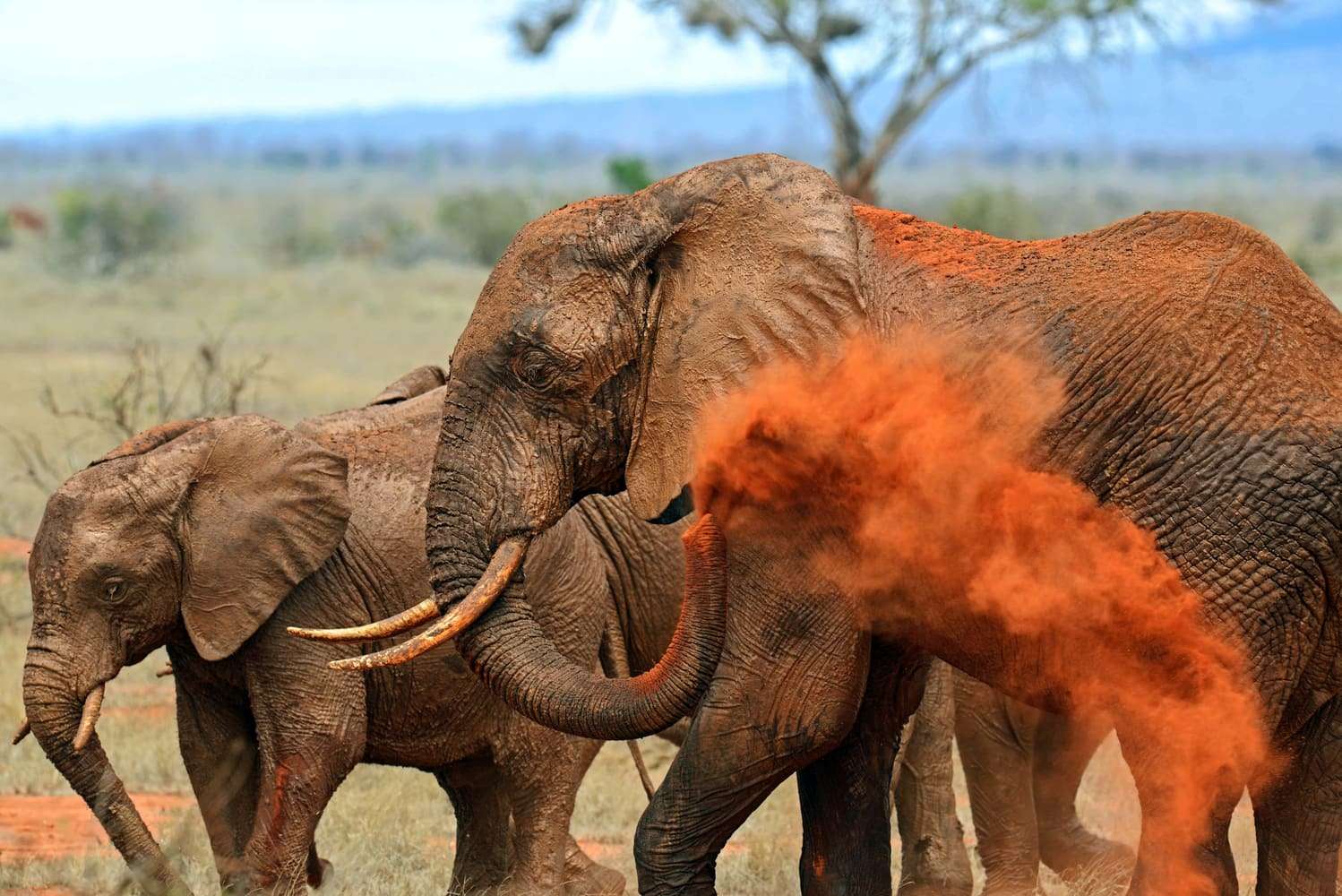
This zone is home to free-ranging elephants, buffaloes and monkeys which you might spot along your trek up Mount Kenya if lucky.
Sunlight filters through this lush foliage, creating a pleasant atmosphere. The montane forest zone is known for its rich flora and fauna including ferns, orchids, and various species of mosses and lichens, this zone is particularly lush and humid with an average annual rainfall of around 2,500mm.
Several bird species can be spotted, including the Hartlaub’s turaco, the mountain yellow warbler, and the African crowned eagle.
2. The Bamboo Zone
This zone is dominated by pure stands of the bamboo, giving way to a bamboo-forest mosaic. Lower still one finds closed canopy montane forest locally characterised by species such as Cedar, Yellowwood, Giant Camphorwood, and Pillarwood.
These by dense thickets of bamboo forms an important habitat for a number of wildlife including the big tusked African elephants, buffaloes, Eastern Bongo, monkeys, bushbuck, duiker and several bird species.
Hiking through the Bamboo zone can be a challenging but rewarding tour, as the thickets can be dense and the terrain steep and rocky depending on the route that you will be using while trekking up Mount Kenya.
3. Alpine Moorland Zone (~2,500 to 4,000 Meters)
In the Alpine Moorland Zone, temperatures experience variations. Expect the days to be warm under the African sun, while nights or even daytime bringing cold temperatures due to the higher altitude, features rainfall and a thick humus layer.
The landscape transitions to heath & moorland, featuring waist-high tussock grasses, mountain sedges and hardy plants adapted to the challenging rocky environment. This zone is known for its unique and colorful plant life which additionally includes giant heathers, “giant rosette plants”, mountain proteas, and several species of lobelia.
Additionally, there exists the Hagenia (Rosewood) species, giant St John’s Wort, with many of the trees festooned with mosses and the lichen Old Man’s Beard.
This heath and moorland zone is home to several wildlife species including the hyrax, bushbuck, bird species such as the olive pigeon and mountain buzzard. You will easily notice the hyrax busking on the rocks during your climb.
This terrain can be steep and rocky, cloud-woodland dominated, with an unpredictable weather.
4. Afro-Alpine Zone (4,000 to 4,500 Meters)
This zone introduces colder temperatures, with rocky terrain and open spaces describe this mountain zone. Characterized by unique rock formations, sparse vegetation and the introduction of ice patches, the Alpine Zone showcases a blend of stone and frost.
We have the average temperatures here ranging from -5°C to 10°C. This zone experiences frequent cloud cover and mist which forms a unique landscape scenery.
Large mammals are rare in the afro-alpine ecosystem. You might still spot the Rock Hyrax, Root-rat, Verreaux’s eagle, Mountain Chat among other species of wildlife.
The Giant Thicket Rat and Mt Kenya Mole Shrew are the only other mammals endemic to the mountain. There are several other small rodents present. Reptiles include the endemic Mt Kenya Bush Viper, the near endemic Alpine Meadow Lizard Adolphus, the Kenyan Side-striped Chameleon, Jackson’s chameleon, and various skinks.
5. Glacial Zone (Above 4,500 to 5,199 Meters)
The Glacial Zone experiences extreme cold, with glacial features dominating the landscape. This zone marks the approach to the summit, where the air is thin, and ice and snow become prominent.
At times this zone is characterised by bare and rocky terrain with little to no vegetation due to the harsh and extreme altitude conditions.
The temperatures here is very cold with frequent strong winds. Temperatures can range from -5°C to 10°C.
If you are a good observer you might still notice a small number of wildlife which have adapted to this extreme mountain environment, while some are just passing by since they cannot stay for long due to the high altitude.
The landscape itself offers unique and breathtaking views of the surrounding peaks and valleys. This area of the mountain is an important source of water for the surrounding areas with several rivers and streams flowing from the melting glaciers and snowfields.
Wildlife That You Might See On Mount Kenya
The lower parts of Mount Kenya forest – the bamboo zone plays host to many different wildlife that you might come across, and they include; giant forest hog, tree hyrax, white-tailed mongoose, elephant, black and white colobus and sykes monkeys, genet cat, hyena, waterbuck, Mount Kenya mouse shrew, suni, black-fronted duiker and leopard.
Best Months To Trek Mount Kenya
Although the mountain can be trekked all year-round, consider the best time to climb Mount Kenya during the cool dry seasons. The best months and safest time to climb Mt. Kenya is during the dry seasons: January – February, and August to September away from the most reliably fine weather. The main routes are likely to be more crowded at this time of the year. If you favor complete solitude over the sunny skies, try going slightly off the peak season. It’s best to avoid the two rainy seasons from mid-March until June and from late October to the end of December.
Mount Kenya Trekking Packages
Join us on an adventure, mountaineering on Mount Kenya. Mount Kenya is Africa’s second-highest mountain at 5,199m (17,058 feet) and the highest of all Kenya Mountains. Of the three main peaks (Batian, Lenana, and Nelion), point Lenana can be reached by climb Mount Kenya trekkers and the other two being only for technical climbers. Browse our featured Mount Kenya trekking tours.
FAQ's About Climbing Mount Kenya Peak
Browse our guide to climbing Mount Kenya, a one stop section for all your Mount Kenya rock climbing tours. In case of any further questions don’t hesitate contact us and we’ll offer the support you need as you prepare for your Mount Kenya Hikes.
Protected by the Kenya Wildlife Service (KWS) and parts of the Mount Kenya Forest Reserve managed by the Kenya Forest Service (KFS), let’s break down Mt.Kenya and discuss things like budgets, fitness and trekking durations, climbing Mount Kenya tours plus answer questions like how tall is Mt Kenya, when is the best time to climb Mt Kenya, and more.
Mount Kenya National Park is a UNESCO World Heritage Site and most of it is protected by Mount Kenya National Park. It offers hikers breath-taking mountain scenery of glaciers, lakes, mineral springs, and alpine forests to trek through, as well as spotting some wildlife. Compared to Kilimanjaro, Mount Kenya is considered a more scenic trek. Mount Kenya is also regarded as a holy mountain by all the communities (Kikuyu and Meru) living next to it.
Although the mountain can be trekked all year-round, consider the best time to climb Mount Kenya during the cool dry seasons of January to March and June to October when the weather is warmer and clear skies which will be an added advantage to encourage hikers to tackle Mount Kenya.
Chat with us and get to understand more about the Mount Kenya destination guide.
For you to trek Mount Kenya, a reasonable level of fitness is required. You don’t need to be a super-fit athlete or experienced hiker since the trek is manageable to anyone with good basic fitness and mental readiness for the trek. The fitter you are, the more enjoyable your Mount Kenya adventure will be.
Tip – the best preparation for trekking up Mount Kenya is taking long walks at home – or better yet, going on a few hiking trips. Include some uphill areas and wear the clothes – especially boots and socks that you’ll be wearing during your Mount Kenya adventure.
Tip – the fitness requirement needed to trek Mount Kenya is to ensure you are mentally prepared about it since the biggest part of the challenge is always mental readiness. It is totally vital to prepare your mind for the excursion.
Remember to stay confident and remind yourself why you are climbing Africa’s highest mountains!
Our Mount Kenya climbing tours are led by our guides who are all licensed and have received training from the appropriate park authorities in regards to mountaineering which is important for your absolute peace of mind.
Altitude sickness – occurs when your body finds it difficult to adjust to low oxygen levels. Altitude sickness usually settles by itself and the main treatment involves going down to a lower altitude as safely as possible. Your guide may decide to send you back down the slopes to guarantee your safety. This usually involves returning to your previous campsite.
Our guide will ensure you have sufficient time to acclimatise properly to high altitudes, delivering the best success rate for summiting.
You can take an anti-altitude sickness medication’s to make your blood absorb more oxygen, – but first chat with your doctor about a prescription before your trek. Just remember, anti-altitude sickness medications are often diuretics.
Dehydration is a major contributor to altitude sickness, so make sure that you always have enough drinking water with you during any African mountain tours.
Many mountain climbers combine Mount Kenya trek with a week on safari. Even a grand finale on Kenya’s fine beaches are popular add-ons – get in touch with our Africa Vultures team to help tailor-make a trip that’s right for you.
The price of a guided trip up Mount Kenya National Park depends on factors like the time of year you wish to trek, the number of people in your booking group, and the duration of your trek. A general cost guideline is:
Mount Kenya – between USD 800 and USD 2,500 per person
The prices usually include: Road transfers to and from the mountains, Park fees, camping fees, rescue fees, and permits while on the mountain, Camping equipment, Meals and drinks, services of expert trekking crews (guides, cooks and porters).
During your African climbing tour, in the lower parts of Mount Kenya forest, the bamboo zone plays host to many different wildlife that you might come across, and they include; giant forest hog, tree hyrax, white-tailed mongoose, elephant, black and white colobus and sykes monkeys, genet cat, hyena, waterbuck, Mount Kenya mouse shrew, suni, black-fronted duiker and leopard.
While there are many campsites within the Mount Kenya National Park, situated close to entry gates mostly, there are a few semi-luxury and comfortable accommodation options within the park and nearby. Some of the hotels near Mount Kenya National Park include Anabas Mount Kenya National Park is located within the park while the resort property of Fairmont Mount Kenya is located just outside the park, 21 miles from the Simiron Gate.
Mau-Mau Caves offer a fascinating look back to the history of the 1950s while emotions are evoked when visiting the Animal Orphanage, home to the rare Bongo. Visitors can enjoy a nature walk in Mount Kenya National Park while guests staying at the Fairmont can enjoy bird watching outings departing from the grounds.
While Mount Kenya is a challenging and physically demanding climb, it is possible for all beginner-level hikers to successfully climb the mountain. However, most are only able to conquer the central area peaks because the high peaks requires some technical experts.
Are you feeling worried about the hike? Let our team offer suggestions based on our recommended list of our Mt Kenya climbing, trekking and hiking tours.
All our mountain climbing tours ensures you have enough time to acclimatize, which will often give you the best experiences. During your Mount Kenya climbing tour, you may also want to spend a day to rest your hike so giving yourself some extra time is a good idea. Hikers usually complete their Mount Kenya hikes in around four to six days.
If you like hiking challenges, Mount Kenya & Mount Kilimanjaro climbing adventures are some of the best tours you can undertake on your visit to Africa.
Mount Kenya sits on the eastern edge of the Central Highlands of Kenya about 193 km north-east of Nairobi and about 480 km from the Kenyan coast. There is a good road from Nairobi to the mountain. Driving from the Kenyan capital takes four hours.
Compare 6 Mount Kenya climbing tours. Find your perfect Mount Kenya climbing package within minutes.
Ready To Plan A Mount Kenya Trekking Tour?
Browse our selection of Mount Kenya trekking expeditions, or get in touch with one of our African safari experts to help tailor-make the best itinerary for you.