
Shaba National Reserve In Samburu
Shaba National Reserve (239 sq km) is the 3rd and largest of the 3 linked game reserves in Samburu, bordered to the west by the life-giving Ewaso Nyiro River; with its great rocky kopjes (isolated hills), natural springs and doum palms, is more physically beautiful than the nearby national reserves of Samburu and Buffalo Springs. Remember that these three inter-linked game reserves have no fences, which allows wildlife to move freely between them.
Shaba Game Reserve is a real wilderness experience, and the park gets its name after the volcanic Mount Shaba which lies partially within the reserve and 5000 years ago oozed lava down the Nyambeni Hills. With 4 springs Shaba is ironically better watered than Buffalo Springs or Samburu. Most Shaba-based lodges conduct their game drives in Buffalo Springs. Shaba is ideal for those looking to remain a step removed from busy safari circuits, with an unparalleled African luxury safari experience.


Samburu Safari Tours


4 Days Masai Mara Private Safari
Discover the big five wildlife in style with our exclusive …


9 Days Luxury Kenya Safari
Join us on this luxury safari, visiting some of the most epic wildlife locations…

5 Days Private Kenya Safari
Discover Kenya’s iconic destinations in this epic adventure…
6 Days Kenya Safari Tour
An unchartered wilderness journey on a 4×4 in Kenya’s intimate…
Shaba Reserve Landscape & Scenery
Together with Samburu National Reserve and Buffalo Springs National Reserve, Shaba shares the rugged landscape characteristics. The vegetation in Shaba National Reserve consists of grasslands, doum palms, and acacia trees, while along the river, you will find a riparian zone of tall trees; additionally, much of Shaba’s charm lies in the beauty of its landscape, which includes deep gorges and waterfalls on the scenic Ewaso Nyiro River.
The Ewaso Ng’iro River is life giving for the area. The permanent water ensures that an abundance of wildlife exists in the reserve at all times. Open grasslands dotted with springs and swamps give way to rocky hills and dusty plains strewn with lava boulders. Massive Shaba Hill towers over this appealing landscape. Shaba Game Reserve holds an important place in Kenya’s conservation history.
Safari Activities In Shaba National Reserve
Discover some of the best things to do in Shaba Game Reserve. Luckily, the setting and climate of Samburu allows for quality wildlife viewing all-round the year; from birding, photography safaris, cultural tours, bush sundowners, guided nature walks to camel trekking safaris, let’s have a look at the number of notable activities that Shaba offers.
1. Wildlife Game Drives In Shaba Reserve
The main activity in Shaba Reserve is the guided game drives, and bird watching which will take you around the park in search of these animal species. The game viewing drives normally start as early as 6:00am. when the gates open, and involve the use of a 4X4 Land Cruiser Jeep with an open roof-top.
Most game drives combine time in Shaba with longer visits in the neighboring, more wildlife-rich Buffalo Springs and Samburu National Reserve. Remember, however, going to Samburu Reserve will cost extra in reserve fees.
As for Night Game drives, a curiosity for many visitors to Samburu. Please Note that these night game drives are not allowed inside the main Samburu National Reserve and only happen on private or group conservancies which border the main Samburu Reserve. Expect the timings to range from 7pm to 9pm, which depends on the camp or lodge that offer the night excursions.
The Land Cruiser safari vehicles accommodate 6 seat passengers (everyone with their own spacious window seat) but can additionally seat up to 8 adults with an extra seat included and with one person sitting beside the Driver. The vehicle has a spacious game viewing roof, is more reliable, strong and spacious enough while also being marginally more comfortable than the only other option.


2. Camel Safari Holidays In Samburu
Discover Samburu’s wilderness on a camel ride. Shaba camel safaris beautifully and intimately showcase the best of Shaba, from its scorched grasslands to its riverine forests, marshlands, and watering holes.
One of the most fun-filled safari experiences in Kenya’s Northern region. Camel back safari tours in Samburu allows guests to get up-close with plain game such as zebra, giraffe, and ostrich. You will walk or ride with Samburu tribesmen and camels carrying the camp, or ride them through the dry riverbeds.
You can decide on a two-hour round trip with sundowners in between or go on a longer camel safari and fly camp in the bush. Accommodation while on a camel trekking Safari in Samburu is often in the form of mobile camps which move along with the planned ride. These camps include comfortable bedding inside tents which may vary from deluxe type camps more simple 2 or 3 man tents but with various facilities included such as freshly cooked meals and help with pitching camp.
3. Sundowners In Shaba Reserve
Delight in the wide-open sky and space of Shaba plains on an unforgettable bush sundowner at Shaba Reserve, where you will be served drinks and cocktails while watching the sight of the African sunset. This usually happens as the sun begins its descent, the sundowner begins with a gentle evening game drive, arriving at the sundowner site just as the evening sky turns gold-pink, surrounded by nothing but scenic views framed by stunning landscapes and magnificent wildlife.
Your chairs will be set up facing towards the extensive scenic Samburu plains, accompanied by a well packed mobile bar service and cocktail snacks served in the raw wilderness of the African savannah. Musical entertainment can also be provided at request. After sunset you will be driven back to the lodge in time for dinner, passing the swamps at the ideal time to spot hippos out of the water.
The setting happens to be on the sand bank along river Ewaso Nyiro where your views are framed by a background of landscapes and magnificent wildlife; – a “once in a lifetime” experience.
Picnic Lunch: usually arranged during a full day game outing in the reserve so that one does not have to go back to the lodge or camp for lunch, the meal itself is in the form of packed lunch boxes which are provided by your camp or lodge by prior arrangement the night before to allow them adequate time to prepare the meal boxes. The meal will be enjoyed under a tree, on a scenic setting out in the wild.
Bush Breakfast & Dinners: in the case of a Bush dinner, this could also be an event in itself around a bonfire with entertainment such as light music or tribal dance performances. Bush meals are typically arranged at special chosen sites within Samburu Reserve – generally located outside of but very near the respective Lodges or Camps. Expect the menus to range from multi-course fine cuisine to more casual bush barbeque meals, prices for these special meals vary widely starting from USD 70 per person all the way to USD 150 per person for a more luxurious bush meal.
Special Requests: the meals can also be arranged to cater for certain special dietary requirements such as gluten free, vegan, vegetarian and even restricted vegetarian such as for Indian Jain diets which exclude use of Onions or Garlic as ingredients. Though choices are limited for bush meals, in-house dining at the lodges or camps promises more dietary options. Make sure you make an early request for easy planning.
4. Cultural Trips With Nomadic Pastoralists Of Samburu
It may be possible to leave the park to visit a local Samburu village community in the company of your safari guide. The Samburu are Nilotic, semi-nomadic shepherds who live in north-central Kenya. A Samburu cultural visit is a popular activity while on a safari to Northern Kenya, and offers one of the rare chances to experience a true taste of local life while on your African vacation. Experience the captivating culture of the Samburu tribe on a visit to their village. Gain an insight and understanding about the ‘Samburu culture ‘ which is one of the most famous tribes. From their everyday life, exciting dances, their colorful clothing’s as well as their pastoral lifestyle have attracted tourists across the globe from time to time.
Learn about the African traditional cultures where you’ll get a chance to look inside their houses and catch a glimpse of how their family structures, and of course if you wish you can buy some Samburu jewelry which you will first notice from colorful shukas they are wearing, and the brightly beaded jewelry – the bracelets, necklaces, and amulets the women and men are wearing – something to remind you of your Kenyan vacation.
The Samburu people live in huts, which are round in shape with a small entrance closed by a blanket; they have no windows but only two holes which serve to filter the light and let the smoke of the fire that usually burns inside, to be released outside; it is usually used for cooking. The huts are built by women using interwoven sticks, mud and cow dung; they can be easily dismantled and transported and mounted elsewhere. The interior of the hut is divided into two small rooms, one for the husband and sons, the other for the wife and daughters. A collection of these huts, which form a village called ”manyatta” in Samburu language, consists of four to ten families.
The Samburu speak the Samburu dialect of the Maa language, which is a Nilotic language. The Samburu sub tribe is the third largest in the Maa community of Kenya and Tanzania, after the Kisonko (Isikirari) of Tanzania and Purko of Kenya and Tanzania. Samburu people just like the Maasai tribe, still retain many of their traditions as they live largely untouched by modern day civilization, in areas surrounding Samburu National Reserve and to the South of the Lake Turkana.
5. Walking Safaris In Shaba Reserve
Within the lodge, guided bush walks in Samburu are led by our expert guides and (a member of the park security team), who have knowledge of the landscape, flora and fauna of this breathtaking haven, on foot is the best way to explore this wilderness reserve, and by far an exciting way to experience a safari.
Together we will follow animal trails and tracks, with luck get up close to the resident eland, zebra and giraffe, learn about traditional uses of wild herbs & barks, and observe other smaller wildlife. As for all Kenya walking safaris it’s advisable to move out earlier, before the heat builds up, allowing you enough time to explore Samburu’s unique landscape at a more relaxed pace before you return to the lodge for breakfast. Head out on an hour-long guided nature walk in the area surrounding your chosen camp, or venture further to one of the surrounding conservancies for a longer trek of 2-4 hours.
Like all national park in Kenya, except Hell’s Gate National Park, walking in the Samburu Main Reserve is prohibited, excluding select areas around lodges and camps and the surrounding conservancies.
6. Visit Reteti Elephant Sanctuary
Take a visit to Reteti Elephant Sanctuary – the sanctuary takes in orphaned and abandoned elephant calves with the aim to release them back into the wild herds next-door Reteti.
This is the result of a widely recognised and expanding grassroots movement of community-driven conservation across Northern Kenya; a movement that is growing new economies, transforming lives and conserving natural resources.
Reteti is located in the Namunyak Wildlife Conservancy in Northern Kenya. It is an eight-hour drive from Nairobi. Guests can also access the place by air.
During your visit, you will be paired with a keeper who will tell you about our work and answer any questions. From a special viewing platform, you will watch the elephants come in from their walk to receive their bottles and have mud hole playtime. Afterwards, you will be given a behind the scenes tour of the sanctuary.
Visiting hours match with the elephants’ feeding times. It is important that you arrive promptly for the full experience. Make sure to book at least 24 hours in advance to ensure availability, as there are limited slots and capacity. Same-day bookings are not possible, and we request that you do not visit the orphanage without a prior reservation/ notice.
The Sunrise Feed, for Sarara Guests only – 5.30 am – 7.00 am (feeding is at 6.00 am).
The Morning Feed, exclusive Group only – 8.30 am – 10.00 am (feeding is at 9.00 am) Other visitors are welcome when no exclusive group booked.
The Midday Feed, public viewing – 11.30 am – 13.00 pm (feeding is at 12.00 pm) No more than 3 groups. Max 15 – 20 people.
The Afternoon Feed, Sarara Guests only – 14.30 – 16.00 (feeding is at 15.00).
The Evening Feed, Sarara Guests only – 17.30 pm – 19.00 pm (feeding is at 18.00 pm).
7. Crocodile Feeding / Watching In Shaba National Reserve
View crocodiles being fed every evening over the Ewaso Nyiro Banks, from the safety of a lodge – crocodile view point.
8. Discover Samburu On Helicopter Safaris
Gain a whole new outlook on Kenya’s incredible landscape by taking one of our thrilling scenic helicopter excursions. Take to the skies in a helicopter for an aerial sighting of Samburu. Beginning with the Ololukwe monolith, the Suguta Valley, Silale Crater, and Lake Logipi, areas rarely reached by game drive vehicle. Fly between the jagged snow-capped peaks of Africa’s second highest mountain (Mt.Kenya), land on top of volcanic craters, glide through dramatic gorges and soar alongside pink flamingos.
You will have a birds-eye view of Samburu’s sacred mountain, Ol Donyo Sabachi (Ol Lolokwe), which towers 1,000 m above the encompassing plains. Even though helicopter trips are a luxury excursion, this is the ultimate freedom and opportunity to discover Kenya’s most remote and unreachable locations.
Animals & Wildlife In Shaba National Reserve
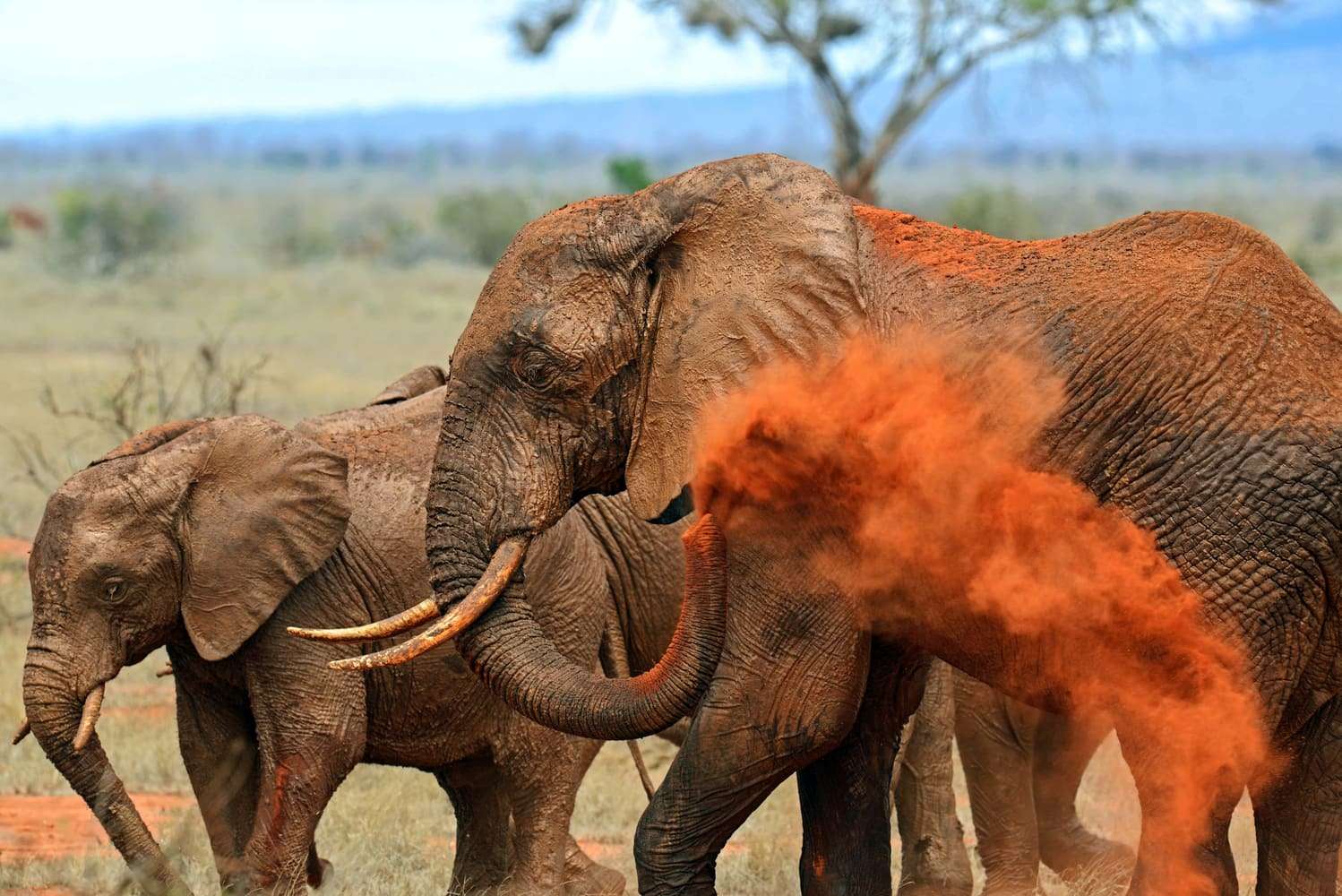
Whereas wildlife densities are generally low, in Shaba National Reserve all the same species are present, and you can see four out of the Big Five, only rhino is absent. Other attractions include the reticulated giraffe, Grévy’s zebra, Beisa oryx, Thomson’s gazelle, sightings of Nile crocodiles in the river, Somali ostrich and the gerenuk. Elephant are plentiful, lion, the occasional leopard, cheetah, buffalo and hyena can at times be seen. Dik-diks are always dashing across the red roads whilst vervet monkeys scamper about under the trees. The long-necked gerenuk stands on its hind legs to reach the higher branches of acacia bushes.
Additional rare sightings include:
Caracal: Medium-sized wild cat with tufted ears
Aardwolf: Nocturnal insectivore rarely seen during the day
Striped Hyena: Solitary scavenger active mostly at night
Best Time For Wildlife Viewing In Shaba National Reserve
While Shaba National Reserve is beautiful all year round, the best time to visit Shaba for wildlife watching is in the dry months of (June to September) when the vegetation thins out and animals gather around remaining water sources. Still – it doesn’t rain much in Samburu so it can be visited throughout the year. The wettest months are April and November.
Birds In Shaba National Reserve
Shaba Reserve has an array of birdlife, including the near-threatened Williams’s lark. Together, Shaba Reserve, Samburu and Buffalo Springs National Reserves have recorded more than 450 bird species, listing them as a top destination for birding safaris. Therefore, if bird watching is your main interest, Shaba is a great choice. The reserve has very little tourist traffic compared to Buffalo Springs and Samburu, which have higher mammal densities.
Popular Birds in Shaba National Reserve
Black-capped social weaver, Black-faced sandgrouse, D’Arnaud’s barbet, Vulturine guineafowl & White-bellied bustard.
List of Birds in Shaba National Reserve
Acacia tit, African palm swift, Ashy cisticola, Bare-eyed thrush, Black-bellied sunbird, Black-capped social weaver, Brown-tailed rock chat, Chestnut weaver, Chestnut-headed sparrow lark, Donaldson Smith’s sparrow-weaver, Fischer’s starling, Golden pipit, Golden-breasted starling, Greater kestrel, Grey wren-warbler, Hunter’s sunbird, Lanner falcon, Mariqua sunbird, Northern brownbul, Palm-nut vulture, Pink-breasted lark, Pygmy batis, Red-bellied parrot, Red-necked falcon, Red-winged lark, Reichenow’s seedeater, Rosy-patched bush-shrike, Secretary bird, Singing bush lark, Somali bee-eater, Somali ostrich, Spotted palm-thrush, Von der Decken’s hornbill, Vulturine guineafowl, White-headed mousebird & Yellow-vented eremomela.
Best Time For Bird Watching In Shaba National Reserve
The dry, open Shaba Game Reserve offers very rewarding birding opportunities all year. Migratory birds arrive in the reserve around November and stay until April. However, be prepared with the weather changes, as short showers can start at any moment. That said, December to February or March are generally best for bird watching.
Best Time To Visit Shaba National Reserve
While Shaba Game Reserve can be visited year-round, wildlife watching is best in the dry months from June to September and again from January to March; during this time there is little to no rainfall, and wildlife gathers around the popular Ewaso River, or nearby watering holes making it easier for safari goers to spot them during game drives. What’s more, the hot-dry months of January and February are also good for seeing wildlife.
Shaba’s wet seasons comprise November and April. During these months, wildlife (has somehow spread out anyway due to the availability of water) and is more challenging to spot in the long grass. However, if you are a bird lover, then the wet season is perfect to enjoy birdwatching as many migratory birds come here during this season.
Weather & Climate At Shaba National Reserve
The Samburu Game Reserve and the surrounding reserves (Buffalo Springs & Shaba) have an arid and semi-arid climate characterized by hot, dry days and cold nights. Daytime temperatures is usually in the region of 32°C/90°F, while the average nighttime is 17°C/63°F. For the morning game drives, we highly recommend warm clothing. Expect the rains which normally arrives in April and early November, although the rainfall is low.
Dry Season In Shaba National Reserve – June to September
These are the dry seasons characterized by hot and sunny days – there is no rainfall.
June & July, these months usually hot and sunny with pleasant temperatures of around 29°C/84°F.
Both months of August & September are characterized by a rise in daytime temperatures with an average of 29°C/84°F.
Wet Season In Shaba National Reserve – October to May
Samburu’s wet season is marked by short rains followed by the long rains. January and February are part of the dry months in between.
The months of October, November & December mark the start of the short rains in Samburu. During this period, expect short afternoon storms with daytime temperatures at an average of 29°C/84°F, which can rise. In addition, the skies tend to be clearer & sunny days possible.
Both January & February marks the start and end of the dry spell in Samburu with the timing a little challenging to predict. Nonetheless, February is hotter with average afternoon temperatures reaching 30°C/86°F or even higher.
The months of late March, April & May in Samburu marks the long rainy season. Still pleasant temperatures but with infrequent rainfall. Sunshine & clear skies still encountered. The rains usually begin from late – march through to late April which is the wettest of them all. The rainfall is in form of short afternoon showers. Expect temperatures in the afternoon to reach 30°C/86°F.
The Best Private Samburu Conservancies
The Costs Of A Samburu Safari
It’s not easy to give exact costs for a Samburu safari. There are many budget-influencing factors like the time of year you travel, how luxurious you’d like your stay to be, whether you fly or drive between camps and lodges, whether or not you go private and exclusive, and which extra activities you want to add to your itinerary, like spa treatments, hot-air ballooning and cultural visits. We can, however, provide estimated costs for a safari in the Samburu.
Safari Tours To Shaba National Reserve
Want to visit Shaba National Reserve? This is one of the most rewarding safari destinations in northern Kenya that you can easily add on a safari package to Masai Mara. Being close to Nairobi, you can easily start off with short Nairobi daytrip tours then proceed to Samburu making it easy to visit in a short time frame, and combine it with other parks as well.
You have plenty of choices to pick from, Samburu midrange safaris to Samburu luxury safaris depending on your travel style.
Ready To Plan A Private Samburu Tour?
Browse our selection of private Samburu tour packages in Kenya above, or get in touch with one of our African safari experts to help tailor-make the best itinerary for you.